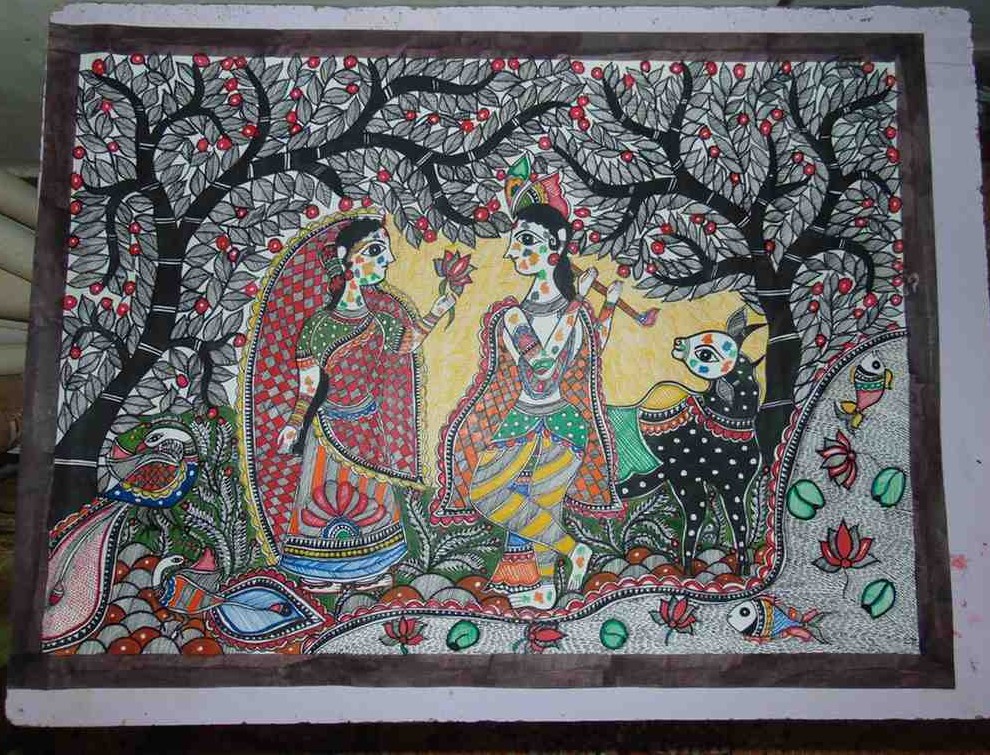
Radha-Krishna under the Tree Art Form: Madhubani Painting .
₹ 2,990.00
($31.79 USD)
Size
22X30 inch
Size
15X22 inch
Size
11X15 inch
Product Details
- Material Type
- Occasion Type
- Item Type
- Country of Origin
- Handmade Paper
- Casual
- Handmade sheet
- India
Additional Information
- Pattern
- Product Dimensions
- Style
- Madhubani
- 15X22 inch
- Indian Traditional
About this item
Lord Krishna: Identified by his characteristic blue skin, a flute (though not clearly visible, his posture often suggests holding one), and traditional attire. He is often shown with a peacock feather in his crown. Radha: His consort, depicted in traditional attire, often holding a lotus flower or engaging in loving interaction with Krishna. Tree: A prominent tree with dense foliage and fruits (often stylized berries/flowers), providing a natural canopy for the divine couple. The leaves are intricately patterned. Cow/Calf: A cow or calf is often present with Krishna, symbolizing his role as a cowherd and representing nurturing, purity, and abundance. Peacocks: Peacocks are frequently associated with Krishna and are symbols of beauty, love, and monsoon season. Lotus Flowers and Fish: In the foreground, lotus flowers (symbolizing purity and beauty) and fish (symbolizing fertility and good luck) are often depicted, representing the serene natural setting. Intricate Patterns and Colors: The painting is characterized by its bold black outlines, vibrant colors (green, red, blue, yellow, orange), and dense, intricate Madhubani patterns filling all available spaces, from the leaves of the tree to the clothing of the figures and the ground. Incident/Symbolism in Brief: This painting depicts Radha and Krishna, a central theme in Vaishnavism, particularly in the Bhakti tradition. Their relationship symbolizes the purest form of divine love (Bhakti), the soul's yearning for God, and the ultimate spiritual union. While not a single "incident," it represents their eternal divine play (lila) in the lush environs of Vrindavan. The scene under the tree evokes a sense of romance, harmony with nature, and spiritual bliss. It signifies devotion, unconditional love, and the divine presence in nature.